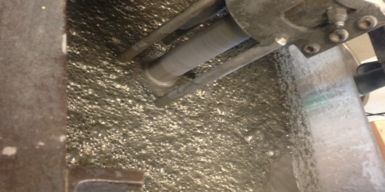
Dispersants
Molycop’s range of modifier chemicals influence the way collectors attach to mineral surfaces. Dispersant chemicals are versatile, inorganic compounds and organic polymers that can work as a depressant or activator to reduce gangue particles that cling to sulfide minerals to obtain a purer concentrate.
Make an EnquiryProduct Features
- Disposes of slimes on particle surfaces
- Allows for a purer concentrate
- Have multiple functions – can work as a depressant or activator
- Are inorganic compounds and organic polymers
Product Overview
Dispersants are reagents that dispose of the slimes that can agglomerate and cover the surfaces of larger particles, therefore preventing them from being recovered.With the use of a dispersing agent a purer concentrate is obtained because they decrease the extent to which gangue particles cling to the sulfide minerals. Most dispersing modifiers are also either depressants or activators with multiple functions.
Dispersing reagents are inorganic compounds and organic polymers.
Dispersant applications
These dispersants are shown with their typical applications:Sodium silicate: A depressant for gangue slimes and siliceous gangue minerals in sulfide and non-sulfide flotation.
Sodium metasilicate: Disperses gangue slimes without raising pH abnormally.
Quebracho: An excellent depressor for calcite in fluorspar flotation. Also a depressant for wolframite.
Starch: Depressant slime gangue when floating sulfides.
Gum Arabic: A good dispersant and depressant for gangue slimes.
Sodium silico-fluoride: Depressant for quartz and feldspar in flotation of spodumene.
Lactic acid: Depressant for mica.
Product Typical Uses
Dispersant modifier chemicals are used in flotation to prevent particle aggregation, promoting uniform dispersion of fine minerals in slurry. By stabilising the suspension, dispersants improve flotation efficiency, ensuring consistent mineral recovery.Product Benefits
Molycop’s range of modifier chemicals influence the way collectors attach to mineral surfaces. Dispersant chemicals:- promote uniform dispersion of fine minerals in slurry
- reduce gangue particles that cling to sulfide minerals
- provide cleaner concentrate production
- improve flotation efficiency.